
How to Actually Pour Vermouth Like a Pro (It’s Easier Than You Think)
Vermouth is one of Spain’s great social drinks, but most people still serve it like they’re standing behind a busy bar.
Ice. Orange slice. Olive. Quick pour.
And while that classic serve absolutely has its place, especially in traditional taverns, it’s not necessarily the best way to serve vermouth at home if your goal is flavour.
If you’re hosting friends for lunch, aperitivo, or a proper vermouth hour, there’s a better way.
And fortunately, it’s very simple.

The Classic Bar Serve
Walk into most vermouth bars in Madrid and you’ll usually get:
- Ice
- Red vermouth
- Orange slice
- Olive
It’s traditional, recognisable, and visually appealing.
Bars serve it this way because it’s fast, practical, and works well in busy service environments.
The ice keeps it cold. The garnish makes it feel complete. It’s a crowd-pleaser.
But bars are often serving for speed.
At home, you can serve for flavour.

The Better Home Serve
If you actually want to taste your vermouth properly, here’s the superior method:
- Chill the bottle in advance
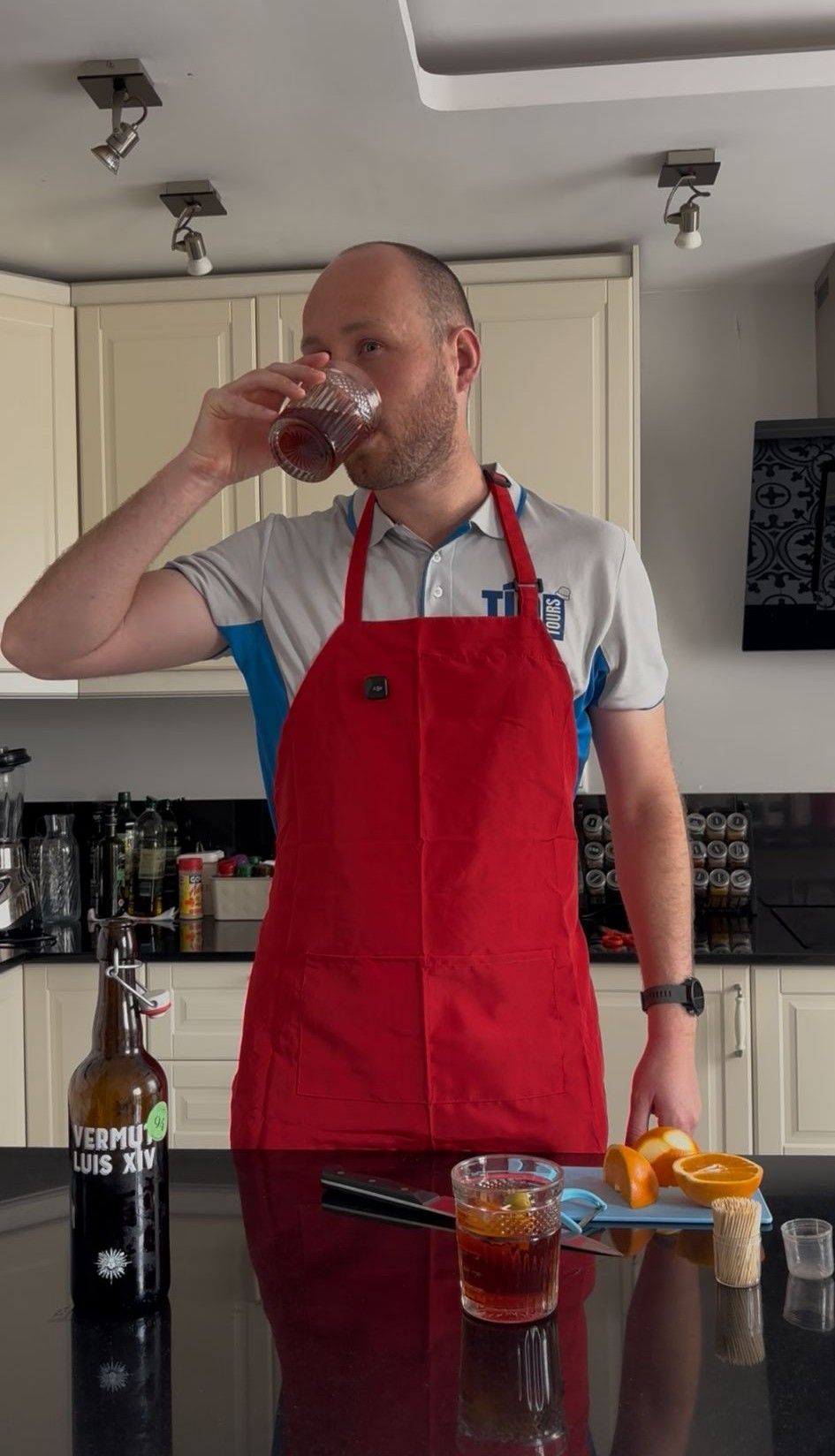
- Serve neat (no ice)
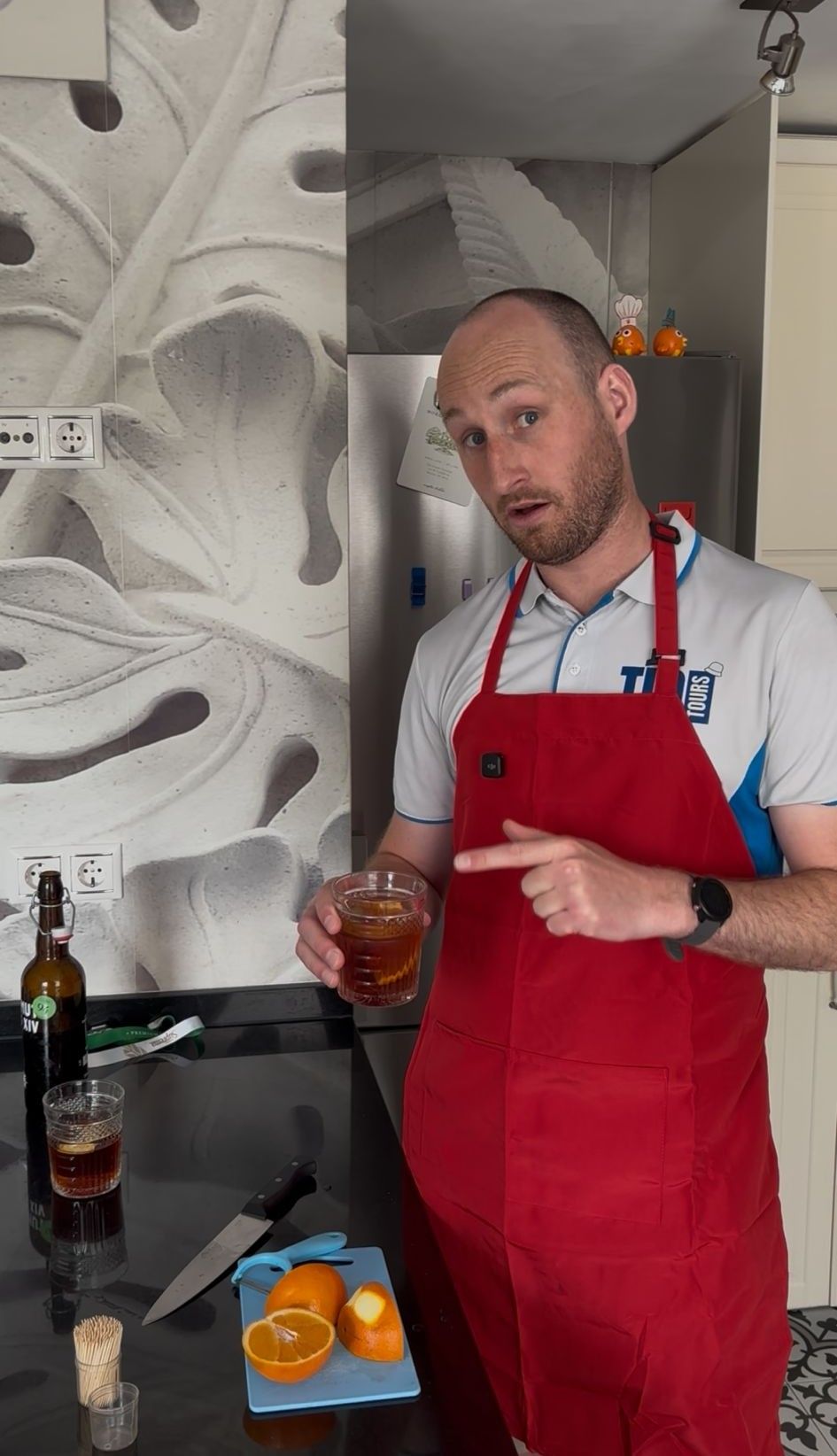
- Use a twist of orange peel
- Skip the olive
That’s it.
By pre-chilling the vermouth to around 8–12°C, you preserve freshness without introducing dilution.
This matters more than most people realise.
Why Ice Can Reduce Quality
Ice seems harmless, but it changes the drink.
As it melts, water gradually enters the vermouth, softening its herbal structure and flattening its complexity.
Vermouth is built on delicate botanical layers — herbs, spices, bitterness, sweetness, aromatics.
Too much dilution blurs those layers.
You lose definition.
If the bottle is already properly chilled, ice simply becomes unnecessary.
Think of it like serving white wine. You chill it first because temperature matters, but watering it down would obviously reduce quality.
The same logic applies here.
Why Olives Aren’t Always Ideal
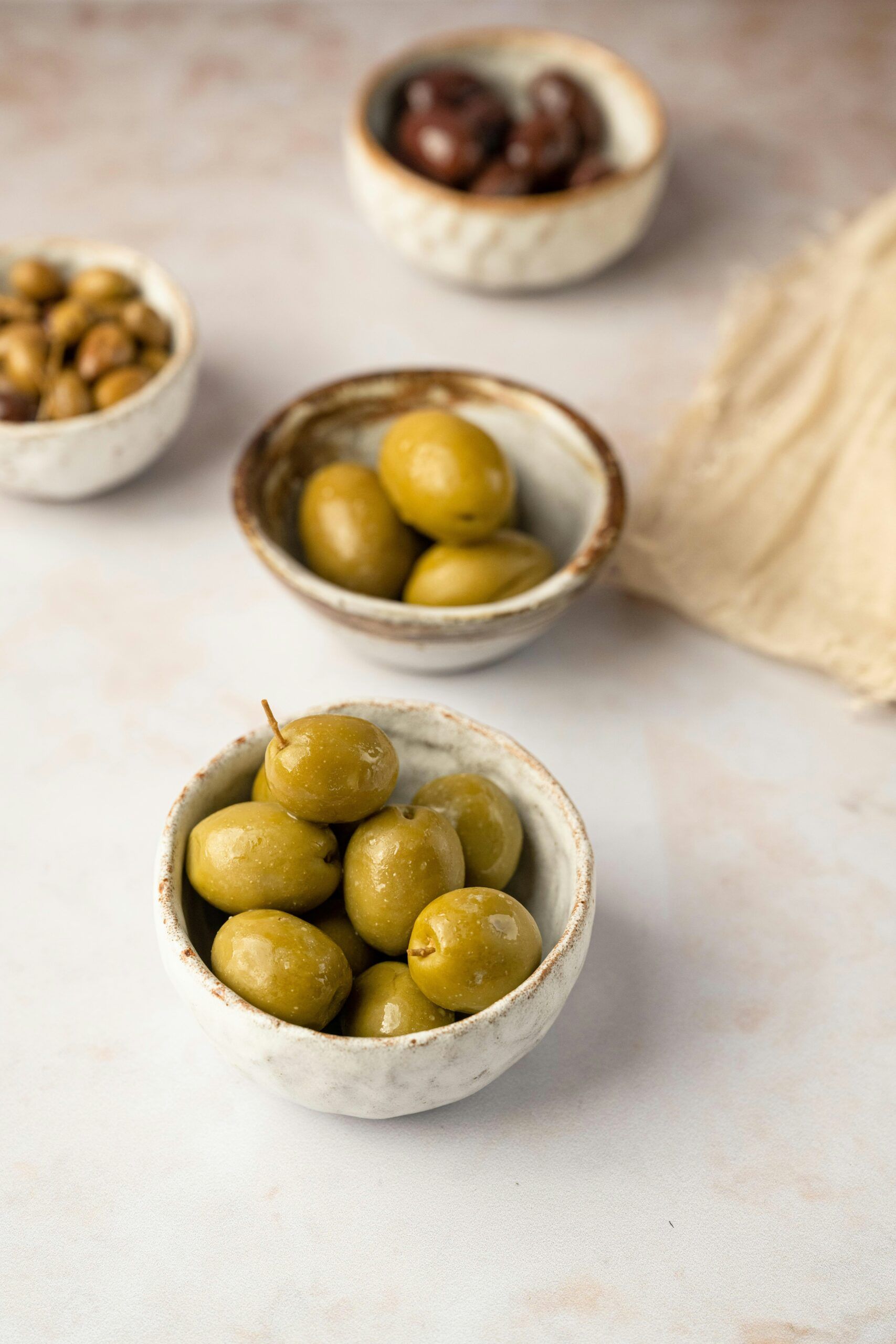
Olives are iconic, but they’re not always the best choice if precision matters.
Because olives are stored in brine, they slowly release salt and acidity into the drink.
Over time, this alters the vermouth’s flavour profile.
For casual bar drinking, this isn’t a huge issue.
But if you’re serving a high-quality vermouth and want guests to appreciate its real character, olives can muddy the experience.
An orange peel twist offers aroma without overpowering.
The citrus oils lift the botanicals while keeping the drink clean and focused.
The Pro Method, Step by Step
- Store vermouth in the fridge before serving
- Pour directly into a chilled glass
- Add a twist of orange peel
- Serve immediately
Optional:
- Pair with olives, gildas, or snacks on the side rather than inside the drink
This keeps the vermouth itself intact while still giving guests the full aperitivo experience.
When the Classic Serve Still Works
Of course, tradition exists for a reason.
If you’re standing at a bustling vermouth bar in Madrid on a Sunday afternoon, the classic ice-and-olive serve feels right.
It’s social. It’s nostalgic. It’s part of the ritual.
But if you’re hosting at home and want to elevate the experience, small adjustments make a big difference.
Final Thought
Most people serve vermouth the way bars do.
But bars optimise for efficiency.
You should optimise for flavour.
Chill it properly. Skip the ice. Use orange peel. Let the vermouth speak for itself.
It’s a small shift, but one that instantly makes your serve feel more refined.
And once you taste the difference, it’s hard to go back.